
No products in the cart.
Inverter Trips on Battery When the AC Starts: Causes and Fixes Leave a comment
Your system runs fine all day. However, at night the grid goes, the AC starts, and the inverter trips on battery. This pattern is common in Pakistan, and the inverter usually gets the blame. In most cases, though, the battery or its settings cause the trip.
Why an inverter trips on battery but not on grid
When the grid is present, it supplies whatever the battery cannot. During load-shedding, however, the battery must carry the full load alone. Therefore, any limit on the battery side shows up only at night.
Cause 1: the battery’s discharge limit is too low
Every lithium battery has a maximum discharge current. For example, a 48 V battery with a 50 A limit supplies about 2.5 kW. A 1.5 ton inverter AC can draw up to 2,700 W when it starts, so the battery’s protection cuts off before the fans and fridge even count. As a result, the inverter trips on battery every time the compressor starts.
The fix is more discharge capacity. Either add a second battery in parallel, which doubles the current, or move to a larger unit.
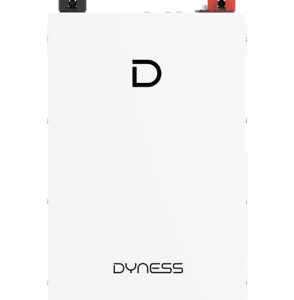 Dyness DL5.0F Lithium-Ion Battery - 51.2V 100AH IP20 5.12kWhRs 230,000View product
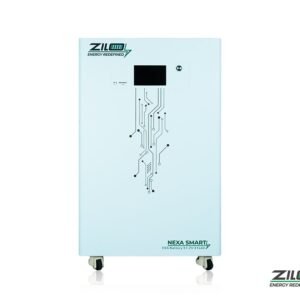 Zilo Nexa Smart 16kWh 51.2V 314Ah Lithium BatteryRs 540,000View product
 Dyness PowerBrick Plus Lithium-Ion Battery - 51.2V 314AH IP65 16.08kWhRs 585,000View product
Cause 2: the inverter’s discharge setting is too low
Most hybrid inverters let you set a maximum battery discharge current. If the installer left it low, the inverter trips on battery even though the battery can do more. Therefore, raise it to match the battery’s rating, but never above it.
Cause 3: thin or long battery cables
A thin cable loses voltage under heavy current. As a result, the inverter sees a low battery for a moment and trips. Also check for loose lugs, because a warm terminal is a warning sign.
Cause 4: the low-battery cut-off is set too high
Battery voltage dips when a heavy load starts. If the cut-off sits too close to the normal voltage, that dip is enough, and the inverter trips on battery again. So set it according to the battery maker’s sheet.
Cause 5: a non-inverter AC
An older fixed-speed AC pulls several times its running power for a moment at start-up. Even a healthy 5 kWh battery struggles with that. In contrast, a DC inverter AC starts gently.
How to find the cause
- First, note the alarm on the inverter screen when it trips.
- Then check the battery’s maximum discharge current on its label.
- After that, compare it with your load when the AC starts.
- Finally, check the discharge setting in the inverter menu.
Our guide on how to size a battery bank shows how to work out the load. For the right battery chemistry, see the lithium vs tubular battery comparison. You can also read the battery specifications on the Dyness website.
Common questions
My inverter trips on battery only in summer. Why?
The AC works harder in summer, so it draws more for longer. In addition, batteries and inverters reduce their limits when they run hot.
Will a bigger inverter stop the trips?
Not if the battery is the limit. Therefore, check the battery’s discharge current before you replace the inverter.