
No products in the cart.
Solar Payback Under Net Billing: Is Solar Still Worth It in Pakistan? Leave a comment
Solar payback used to be simple in Pakistan, because every exported unit cancelled a unit on your bill. However, net billing changed that. Now your solar payback depends on one number above all: how much of your own solar power you use yourself.
Why self-use decides solar payback
Under net billing, a unit you use at home saves you the full grid tariff. In contrast, a unit you export earns only the buyback rate, which is much lower. Therefore, two homes with the same system can see very different savings.
A worked example
Take the system from our 5kW solar system cost breakdown. It makes about 620 units a month. As an example, assume a grid tariff of Rs 50 per unit and a buyback rate of Rs 11. Your own tariff will differ, so treat these figures as an illustration.
| Share of solar you use yourself | Units used at home | Units exported | Monthly saving |
|---|---|---|---|
| 30% | 186 | 434 | Rs 14,074 |
| 60% | 372 | 248 | Rs 21,328 |
| 90% | 558 | 62 | Rs 28,582 |
The system and the sunshine are the same in every row. However, the home that uses 90% of its solar saves about twice as much as the home that uses 30%. So self-use, not system size, drives solar payback.
How to work out your own solar payback
- First, add up the full cost of the system, including structure and installation.
- Then estimate your monthly saving with your own tariff and self-use share.
- Finally, divide the cost by the monthly saving to get the payback in months.
For example, the panels, inverter and battery in that system cost Rs 590,150 today. Add your installer’s quote for the rest, and then divide by your saving.
Four ways to shorten solar payback
- Shift load into the day. For example, run the washing machine, pump and iron while the sun is up.
- Add a battery. It stores midday solar and then covers the evening, when grid units cost the most.
- Size to your use. A smaller system that you use fully pays back faster than a large one that mostly exports.
- Cool the house by day. Because an inverter AC holds a cool room cheaply, run it on solar in the afternoon.
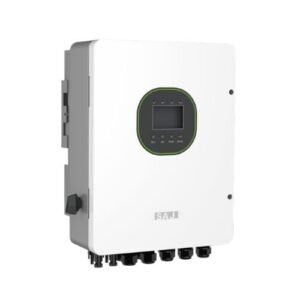 SAJ 6kW Single Phase Hybrid InverterRs 183,750View product
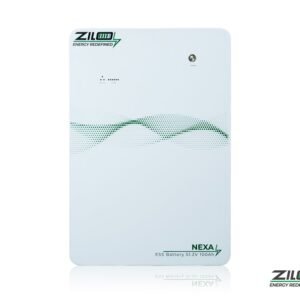 Zilo Nexa 5kWh 51.2V 100Ah Lithium BatteryRs 200,000View product
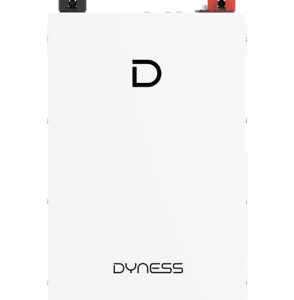 Dyness DL5.0F Lithium-Ion Battery - 51.2V 100AH IP20 5.12kWhRs 230,000View product
What researchers expect
A policy brief from the Pakistan Institute of Development Economics put payback at seven to nine years for systems that still import heavily, assuming 60% self-use. Therefore, the range for solar payback is wide, and your own habits decide where you land. The rules themselves come from NEPRA, and our net metering guide explains them.
Common questions
Is solar payback longer with a battery?
The battery adds cost to the solar payback sum, although it also raises self-use. For homes with evening load and load-shedding, it usually improves the result.
Does solar payback change if tariffs rise?
Yes. When the grid tariff rises, every unit you use yourself saves more, so solar payback gets shorter.
Should I skip the export connection?
If you use almost all your solar, then exports add little. However, a home that is empty all day benefits from selling the surplus.