
No products in the cart.
Inverter Fault Messages: What to Check Before You Call a Technician Leave a comment
An inverter fault on the screen looks alarming. However, most faults belong to one of six groups, and several of them clear with a simple check. Because every brand uses its own codes, this guide explains the groups rather than the numbers. Therefore, keep your manual nearby to match the code to the group.
Before anything else
- First, write down the exact code and the time.
- Then check whether the fault clears by itself after a few minutes.
- Finally, note what was happening, for example rain, a power cut or a heavy load.
These three notes help a technician more than anything else.
Inverter fault 1: grid voltage or frequency
This inverter fault appears when the grid voltage goes too high or too low. This is common in Pakistan, especially on long feeders and during storms. So if the fault appears and clears on its own, the grid is the cause. However, if it happens many times a day, ask your installer to review the grid settings.
Inverter fault 2: insulation or earth leakage
This inverter fault means current is leaking from the panel wiring to earth. It often appears on damp mornings or after rain, because moisture gets into a damaged cable or a loose connector. Therefore, do not ignore it. Ask an installer to test the strings.
Inverter fault 3: battery alarms
Battery alarms split into two kinds. A communication alarm means the inverter cannot hear the battery, whereas a voltage alarm means the battery is too low or too high. For the first kind, check the data cable and the battery profile. For the second, see our battery sizing guide.
Inverter fault 4: over-temperature
Inverters protect themselves from heat. If yours sits in direct sun or in a closed cupboard, it will reduce power and then stop. So give it shade and air, and clean the fan and vents.
Inverter fault 5: overload
This inverter fault means the load exceeded what the inverter or battery can supply. For example, an AC, a pump and an iron may have started together. Therefore, switch off some load and restart. If it happens often, the system is too small for the house.
Inverter fault 6: PV over-voltage
Too many panels in one string push the voltage above the inverter’s limit, usually on cold, bright mornings. This fault can damage the inverter, so switch off the DC isolator and call your installer.
How to restart safely
If the manual allows a restart, switch off in this order: load, panels, grid, and then battery. After that, wait a few minutes and switch on in the reverse order. However, never open the inverter yourself, because it holds charge even when off.
When an inverter fault needs a technician
- The same fault returns after a restart.
- You smell burning or see heat marks.
- The insulation or PV over-voltage fault appears.
- The screen stays blank although the battery and grid are present.
If the inverter is old and faults keep returning, compare a replacement in our comparison of 6kW hybrid inverters. For brand codes, the maker’s own support pages are the best source, for example Solis.
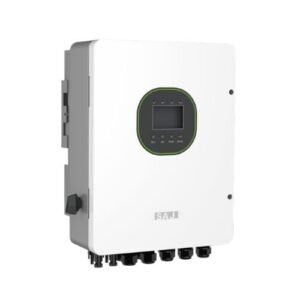 SAJ 6kW Single Phase Hybrid InverterRs 183,750View product
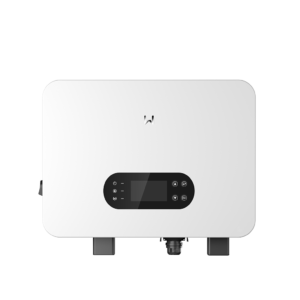 Goodwe 6kW IP66 Hybrid Solar InverterRs 190,000View product
 Sungrow 6kW Single Phase Hybrid Solar InverterRs 190,000View product
Common questions
Is every inverter fault serious?
No. Grid faults and overloads usually clear on their own. However, insulation and over-voltage faults need a professional.
Why does the fault appear only in the morning?
Morning brings dew and cold panels. Therefore, insulation faults and over-voltage faults both show up then.
Does a fault cancel my warranty?
No, although opening the unit or ignoring a repeated fault can. So report it and keep a record.