
No products in the cart.
On-Grid vs Hybrid vs Off-Grid Inverter: Which Suits Load-Shedding? Leave a comment
Hybrid vs off-grid inverter, or on-grid: every solar inverter is one of these three types. They look alike on the wall. However, they behave very differently when the power goes out. Therefore, if load-shedding is the reason you are buying solar, choosing the wrong type is the most expensive mistake you can make.
On-grid vs hybrid vs off-grid inverter at a glance
On-gridPanels and grid only. No battery.Tap to flip
On-gridLowest cost per unit. Switches off whenever the grid goes down, even in full sun.
HybridPanels, grid and battery working together.Tap to flip
HybridKeeps your home running during load-shedding and can also sell surplus units.
Off-gridPanels and battery. The grid is only a backup charger.Tap to flip
Off-gridGood backup at a low price. It cannot sell units to the grid.
| On-grid | Hybrid | Off-grid | |
|---|---|---|---|
| Works during load-shedding | No | Yes, with a battery | Yes, with a battery |
| Needs a battery | No | Optional | Most models work better with one |
| Can sell units to the grid | Yes | Yes | No |
| Typical buyer | Shops, offices and factories with daytime load | Homes with regular load-shedding | Homes on a budget, or with no interest in selling units |
Why an on-grid inverter stops in a power cut
An on-grid inverter synchronises with the grid and has no battery to fall back on. When the grid fails, it must shut down so that it does not send power into lines that repair crews believe are dead. Every on-grid inverter follows this safety rule. As a result, the house stays dark until the grid returns, even if your panels are in full sun.
For this reason, on-grid is a good choice only where the grid is reliable during working hours, or where a generator already covers outages.
Why a hybrid inverter suits most homes
A hybrid inverter does everything an on-grid unit does and also adds a battery connection. During a power cut, it isolates the house from the grid and then keeps running from panels and battery. In addition, when the battery is full and the house needs less than the panels are making, it can send the surplus to the grid.
You do not have to buy the battery on day one. Instead, many customers install the hybrid inverter and panels first, and then add the battery before summer. For a comparison of models, see our guide to 6kW hybrid inverters.
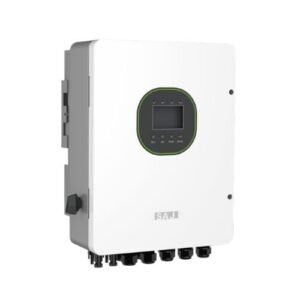 SAJ 6kW Single Phase Hybrid InverterRs 183,750View product
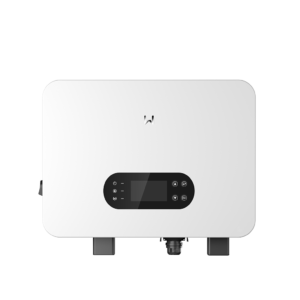 Goodwe 6kW IP66 Hybrid Solar InverterRs 190,000View product
 Sungrow 6kW Single Phase Hybrid Solar InverterRs 190,000View product
Hybrid vs off-grid inverter: where off-grid still makes sense
In a hybrid vs off-grid inverter comparison, price is the first difference. Off-grid inverters cost less than hybrids of the same size. They take power from panels first, then the battery, and use the grid only to top up. Therefore, they suit homes that want backup at the lowest price and do not plan to sell units.
However, the trade-off is that the system wastes surplus solar once the battery is full, because the inverter has nowhere to send it.
 Tesla VMII 5.6 KW 6000 48V OFF Grid Solar InverterRs 95,000View product
 NRE PVMAXX 6.2KW 6500PV Off Grid Solar InverterRs 122,000View product
 Power Square VM-II Plus 3kW Off Grid Solar InverterRs 79,500View product
On-grid inverters we stock
Our on-grid range is three-phase Solis, in sizes for commercial connections.
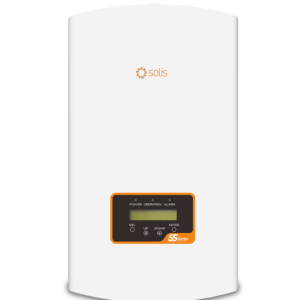 Solis 5kW 3-Phase On Grid Solar Inverter (S5-GR3P5K)Rs 311,520View productSolis 12kW 3-Phase On Grid Solar Inverter (S5-GR3P12K)Rs 239,000View product
How net billing changes the hybrid vs off-grid inverter choice
New solar connections in Pakistan are now on net billing under NEPRA rules. As a result, your electricity company buys exported units at a much lower rate than the rate you pay for grid units. Therefore, every unit you use yourself is worth far more than a unit you sell. In the hybrid vs off-grid inverter choice, this favours a hybrid with a battery that stores daytime solar for the evening. Our net metering guide explains the rules.
Hybrid vs off-grid inverter or on-grid: which should you buy?
Here is the hybrid vs off-grid inverter decision in short, with on-grid for completeness:
- Regular load-shedding at home: hybrid, with a battery now or later.
- Tight budget and no plan to sell units: off-grid with a battery.
- Business with daytime load and a reliable grid: on-grid.
- Not sure: hybrid, because it is the only type that can do all three jobs.
Common questions
Can I add a battery to an on-grid inverter later?
Not directly, because an on-grid inverter has no battery input. Instead, you would need to replace it with a hybrid or add a separate battery inverter.
Does a hybrid inverter work without a battery?
Most do, including the ones above. However, without a battery it behaves like an on-grid inverter and will not power the house during a cut.
Is an off-grid inverter completely disconnected from the grid?
No. Most off-grid inverters sold in Pakistan accept a grid input to charge the battery and to carry the load when solar and battery run low. However, they do not export.
Still unsure about the hybrid vs off-grid inverter choice? Then send us your load and your load-shedding hours, and we will advise.